Esperanza Hellyer
Blog entry by Esperanza Hellyer
In recent years, the automotive industry has witnessed significant advancements in technology aimed at improving the safety and efficiency of vehicles. One such innovation is the mandatory implementation of Beacon V16 technology in vehicles. This technology, also known as "Baliza V16" in some regions, is designed to enhance visibility and communication between vehicles on the road, thereby reducing the risk of accidents and improving overall road safety. In this paper, we will discuss the evolution of Beacon V16 technology, the benefits it offers, and the timeline for its mandatory implementation.

Evolution of Beacon V16 Technology
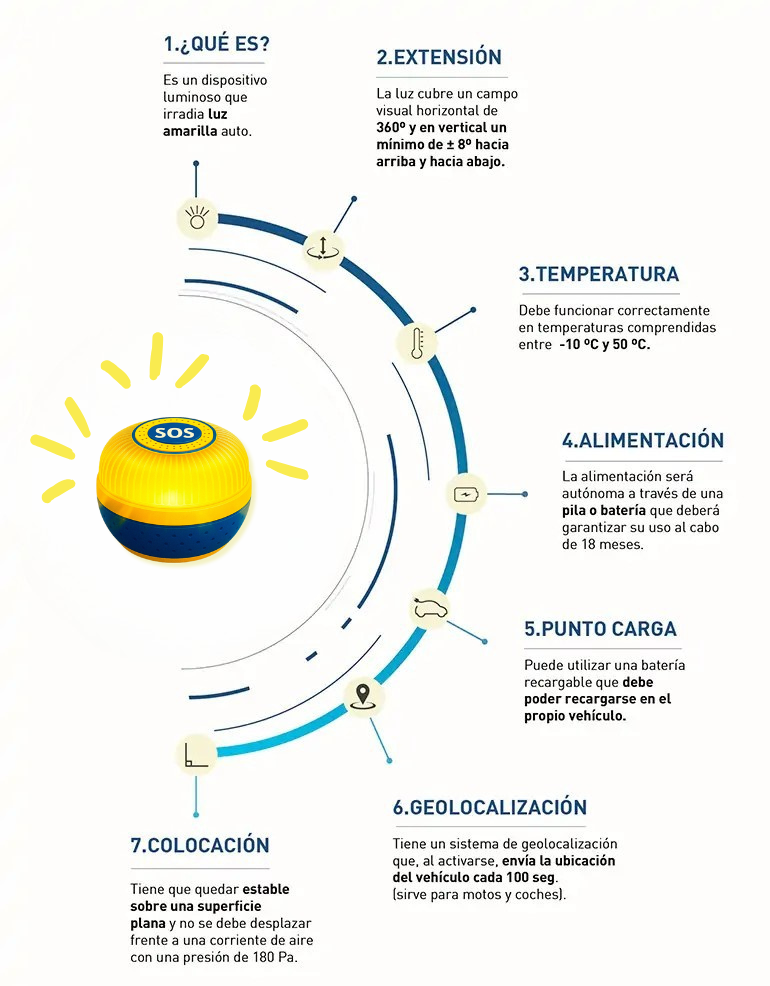
Beacon V16 technology is a type of advanced warning system that uses a combination of visual and audio signals to alert drivers to potential hazards on the road. The technology has evolved significantly over the years, with new features and capabilities being added to improve its effectiveness. Originally introduced as a simple flashing light system, Beacon V16 has now evolved to include features such as GPS tracking, vehicle-to-vehicle communication, and automatic emergency braking.
One of the key advancements in Beacon V16 technology is the integration of GPS tracking capabilities. This allows vehicles equipped with Beacon V16 to broadcast their location and speed to other vehicles on the road, enabling them to anticipate potential collisions and take evasive action if necessary. In addition, Beacon V16 technology now includes vehicle-to-vehicle communication, which allows vehicles to exchange information about road conditions, traffic patterns, and other relevant data in real-time.
Another important advancement in Beacon V16 technology is the integration of automatic emergency braking. This feature uses sensors and cameras to detect potential collisions and automatically apply the brakes to prevent or mitigate the impact. This not only helps to improve road safety but also reduces the severity of accidents and minimizes the risk of injury to drivers and passengers.
Benefits of Beacon V16 Technology
The implementation of Beacon V16 technology offers several key benefits for drivers, pedestrians, and other road users. One of the primary benefits is improved safety on the road. By alerting drivers to potential hazards and providing real-time information about road conditions, Beacon V16 technology helps to reduce the risk of accidents and minimize the severity of collisions.
In addition to improving safety, Beacon V16 technology also helps to enhance the efficiency of traffic flow. By providing vehicles with real-time information about road conditions, traffic patterns, and other relevant data, Beacon V16 technology enables drivers to make more informed decisions about their route and speed, thereby reducing congestion and minimizing delays.
Furthermore, Beacon V16 technology can help to reduce the environmental impact of vehicle emissions. By optimizing traffic flow and minimizing the risk of accidents, Beacon V16 technology helps to reduce idling time and fuel consumption, leading to lower carbon emissions and improved air quality.
Timeline for Mandatory Implementation
The mandatory implementation of Beacon V16 technology is a significant milestone in the evolution of automotive safety and communication systems. While the exact timeline for implementation may vary depending on local regulations and requirements, several key dates have been established to ensure a smooth transition to mandatory Beacon V16 technology.
One of the first milestones in the timeline for mandatory implementation is the introduction of Beacon V16 technology as a standard feature in new vehicles. Many automakers have already begun to integrate Beacon luz emergencia v16 technology into their vehicles as part of their safety and communication systems, with plans to make it a mandatory feature in the near future.
Another important milestone in the timeline for mandatory implementation is the establishment of regulations and guidelines for the use of Beacon V16 technology. In many regions, government authorities have already started to develop regulations and standards for the implementation of Beacon V16 technology, including requirements for vehicle manufacturers, road operators, and other stakeholders.
Conclusion
In conclusion, the evolution of Beacon V16 technology represents a significant advancement in automotive safety and communication systems. By providing vehicles with real-time information about road conditions, traffic patterns, and other relevant data, Beacon V16 technology helps to improve safety, efficiency, and environmental sustainability on the road. With the mandatory implementation of Beacon V16 technology on the horizon, drivers can look forward to a safer and more connected driving experience in the years to come.